Understanding Mortgage Terms & Amortization: What Every Homebuyer Should Know
When it comes to choosing a mortgage, the interest rate often gets all the attention - but two decisions that are just as important are your mortgage term and your amortization period. Understanding the difference, and how they work together, can save you thousands of dollars over the life of your loan.
What Is a Mortgage Term?
Your mortgage term is the length of time your mortgage agreement is in effect - including your interest rate, lender conditions, and repayment schedule. When your term ends, you'll either need to renew your mortgage with a lender or repay the remaining balance in full.
The Three Common Mortgage Terms
Short-Term Mortgages Short-term mortgages have terms of five years or less. They typically come with lower interest rates and are available in both fixed and variable rate options. The trade-off? You'll need to renew (or pay off) your mortgage sooner, which means more frequent exposure to changing market rates.
Long-Term Mortgages A long-term mortgage has a term of five years or more - often 7 or 10 years. These are almost always fixed-rate products, and the rates tend to be higher in exchange for the added stability and predictability. One important note: long-term mortgages often come with significant prepayment penalties if you pay off the loan in full before the five-year mark.
Convertible-Term Mortgages A convertible mortgage starts as a short-term product but gives you the option to convert it to a longer term down the road. Keep in mind that when you make that switch, your interest rate will typically adjust to match whatever long-term rate your lender is offering at that time.
What Is Amortization?
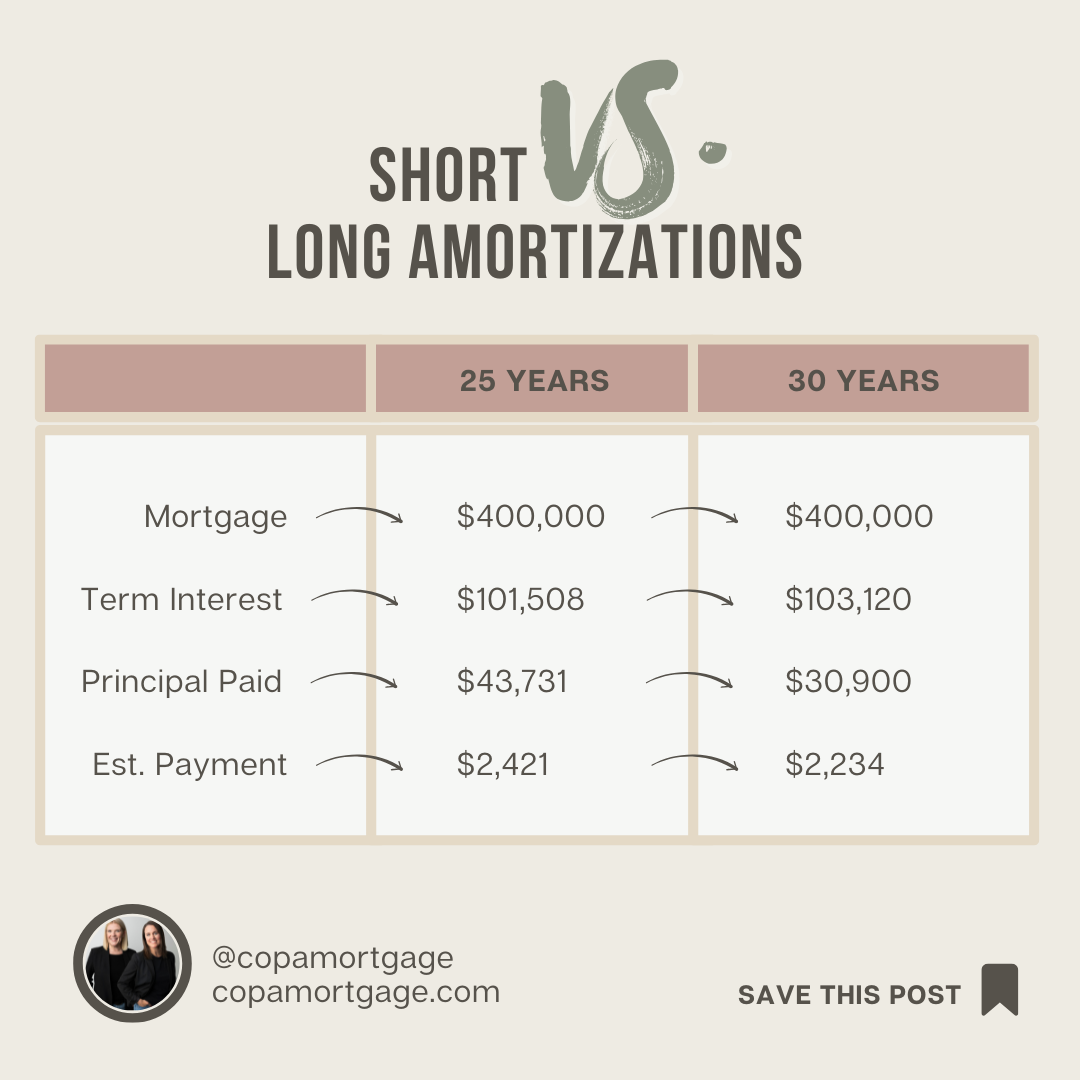
While your mortgage term defines your current agreement with a lender, amortization refers to the total length of time it will take to pay off your mortgage completely.
Most amortization periods in Canada are 30 years or less. A common example: a 5-year fixed-rate mortgage (the term) with a 25-year amortization. This means your current rate and contract are locked in for 5 years, but you'll continue renewing and repaying until the full loan is paid off - 25 years from now.
The longer your amortization, the lower your monthly payments - but the more interest you'll pay overall. The shorter your amortization, the more you pay each month, but the less it costs you in the long run.
What to Consider When Choosing Your Term and Amortization
Here are the key questions to ask yourself:
How much certainty do you need? If rate fluctuations would cause financial stress, a longer fixed term may offer the peace of mind you're looking for.
How stable is your life right now? If you anticipate major changes - a move, a growing family, a career shift - a shorter term gives you more flexibility. Long fixed-rate terms can carry hefty penalties if broken early, which is common when homeowners sell or refinance.
What can you comfortably afford? A longer amortization lowers your monthly payment, which may make homeownership more accessible - just know you'll pay more in interest over time.
What's the total cost of the loan? Don't just compare interest rates. Consider the full picture: penalties, renewal frequency, and the total interest paid over the life of your mortgage.
The Bottom Line
Your mortgage term and amortization are powerful tools - and how you use them matters. The "best" mortgage isn't always the one with the lowest rate. It's the one that fits your financial situation, your life plans, and your long-term goals.
Take time to think beyond the monthly payment. Consider what the mortgage will cost you in total, how often you'll need to renew, and what flexibility you'll need along the way. Making an informed decision now can make homeownership significantly more affordable — both today and for years to come.
Have questions about your mortgage options? Get in touch - we’d love to help!
